1. Upcoming git-crecord release

    By Andrej Shadura

    More than 1½ years since the first release of git-crecord, I’m preparing a big update. Not aware how exactly many people are using it, I neglected the maintenance for some time, but last month I’ve decided I need to take action and fix some issues I’ve known since the first release.

    First of all, I’ve fixed a few minor issues with setup.py-based installer some users reported.

    Second, I’ve ported a batch of updates from a another crecord derivative merged into Mercurial. That also brought some updates to the bits of Mercurial code git-crecord is using.
  2. Working in open source: part 1

    By Andrej Shadura

    Three years ago on this day I joined Collabora to work on free software full-time. It still feels a bit like yesterday, despite so much time passing since then. In this post, I’m going to reconstruct the events of that year.

    Back in 2015, I worked for Alcatel-Lucent, who had a branch in Bratislava. I can’t say I didn’t like my job — quite contrary, I found it quite exciting: I worked with mobile technologies such as 3G and LTE, I had really knowledgeable and smart colleagues, and it was the first ‘real’ job (not counting the small business my father and I ran) where using Linux for development was not only not frowned upon, but was a mandatory part of the standard workflow, and running it on your workstation was common too, even though not official.

  3. Porting inputplug to XCB

    By Andrej Shadura

    5 years ago I wrote inputplug, a tiny daemon which connects to your X server and monitors its input devices, running an external command each time a device is connected or disconnected.

    I have used a custom keyboard layout and a fairly non-standard settings for my pointing devices since 2012. I always annoyed me those settings would be re-set every time the device was disconnected and reconnected again, for example, when the laptop was brought back up from the suspend mode. I usually solved that by putting commands to reconfigure my input settings into the resume hook scripts, but that obviously didn’t solve the case of connecting external keyboards and mice. At some point those hook scripts stopped to work because they would run too early when the keyboard and mice were not they yet, so I decided to write inputplug.

  4. Goodbye Octopress, hello Pelican

    By Andrej Shadura

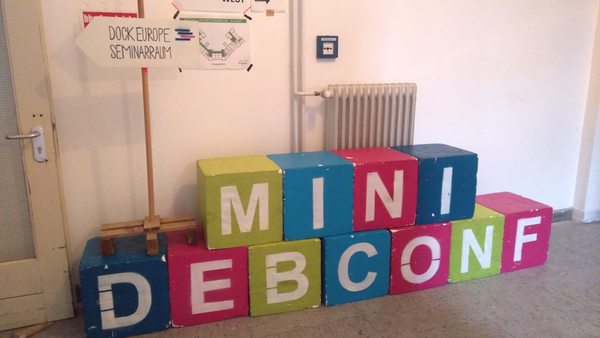
    Hi from MiniDebConf in Hamburg!

    As you may have noticed, I don’t update this blog often. One of the reasons why this was happening was that until now it was incredibly difficult to write posts. The software I used, Octopress (based on Jekyll) was based on Ruby, and it required quite specific versions of its dependencies. I had the workspace deployed on one of my old laptops, but when I attempted to reproduce it on the laptop I currently use, I failed to. Some dependencies could not be installed, others failed, and my Ruby skills weren’t enough to fix that mess. (I have to admit my Ruby skills improved insignificantly since the time I installed Octopress, but that wasn’t enough to help in this case.)

  5. Say no to Slack, say yes to Matrix

    By Andrej Shadura

    Of all proprietary chatting systems, Slack has always seemed one of the worst to me. Not only it’s a closed proprietary system with no sane clients, open source or not, but it not just one walled garden, as Facebook or WhatsApp are, but a constellation of walled gardens, isolated from each other. To be able to participate in multiple Slack communities, the user has to create multiple accounts and keep multiple chat windows open all the time. Federation? Self-hosting? Owning your data? All of those are not a thing in Slack. Until recently, it was possible to at least keep the logs of all conversations locally by connecting to the chat using IRC or XMPP if the gateway was enabled.

  6. How to stop gnome-settings-daemon messing with keyboard layouts

    By Andrej Shadura

    In case you, just like me, want to have a heavily customised keyboard layout configuration, possibly with different layouts on different input devices (I recommend inputplug to make that work), you probably don’t want your desktop environment to mess with your settings or, worse, re-set them to some default from time to time. Unfortunately, that’s exactly what gnome-settings-daemon does by default in GNOME and Unity. While I could modify inputplug to detect that and undo the changes immediately, it turned out this behaviour can be disabled with an underdocumented option:

  7. Manual control of OpenEmbedded -dbg packages

    By Andrej Shadura

    In December last year, OpenEmbebbed introduced automatic debug packages. Prior to that, you’d need to manually construct FILES_${PN}-dbg variable in your recipe. If you need to retain manual control over precisely what does into debug packages, set an undocumented NOAUTOPACKAGEDEBUG variable to 1, the same way Qt recipe does:

    NOAUTOPACKAGEDEBUG = "1"
    FILES_${PN}-dev = "${includedir}/${QT_DIR_NAME}/Qt/*"
    FILES_${PN}-dbg = "/usr/src/debug/"
    FILES_${QT_BASE_NAME}-demos-doc = "${docdir}/${QT_DIR_NAME}/qch/qt.qch"
    

    P.S. Knowing this would have saved me and my colleagues days of work.

  8. Migrate to systemd without a reboot

    By Andrej Shadura

    Yesterday I was fixing an issue with one of the servers behind kallithea-scm.org: the hook intended to propagage pushes from Our Own Kallithea to Bitbucket stopped working. Until yesterday, that server was using Debian’s flavour of System V init and djb’s dæmontools to keep things running. To make the hook asynchronous, I wrote a service to be managed to dæmontools, so that concurrency issued would be solved by it. However, I didn’t implement any timeouts, so when last week wget froze while pulling Weblate’s hook, there was nothing to interrupt it, so the hook stopped working since dæmontools thought it’s already running and wouldn’t re-trigger it. Killing wget helped, but I decided I need to do something with it to prevent the situation from happening in the future.

  9. Phulud? No, Phulad.

    By Andrej Shadura

    If you bought an North India travel guide by Vanessa Betts and Victoria McCulloch, and tried to figure out where is ‘Phulud’ and how to get there from Deogarh (and how to get to Deogarh itself from Udaipur), don’t waste your time googling, as it’s not Phulud, but Phulad.

    It does seem that the narrow gauge journey from Deogarh to Phulad is indeed beautiful:

    Meanwhile, I have also found this very interesting post by Mary Anne Erickson: Impressions of India: Udaipur to Deogarh. I’m not yet sure we’re going to follow that route, but it seems promising.

  10. Community time at Collabora

    By Andrej Shadura

    I haven’t yet blogged about this (as normally I don’t blog often), but I joined Collabora in June last year. Since then, I had an opportunity to work with OpenEmbedded again, write a kernel patch, learn lots of things about systemd (in particular, how to stop worrying about it taking over the world and so on), and do lots of other things.

    As one would expect when working for a free software consultancy, our customers do understand the value of the community and contributing back to it, and so does the customer for the project I’m working on. In fact, our customer insists we keep the number of locally applied patches to, for example, Linux kernel, to minimum, submitting as much as possible upstream.